
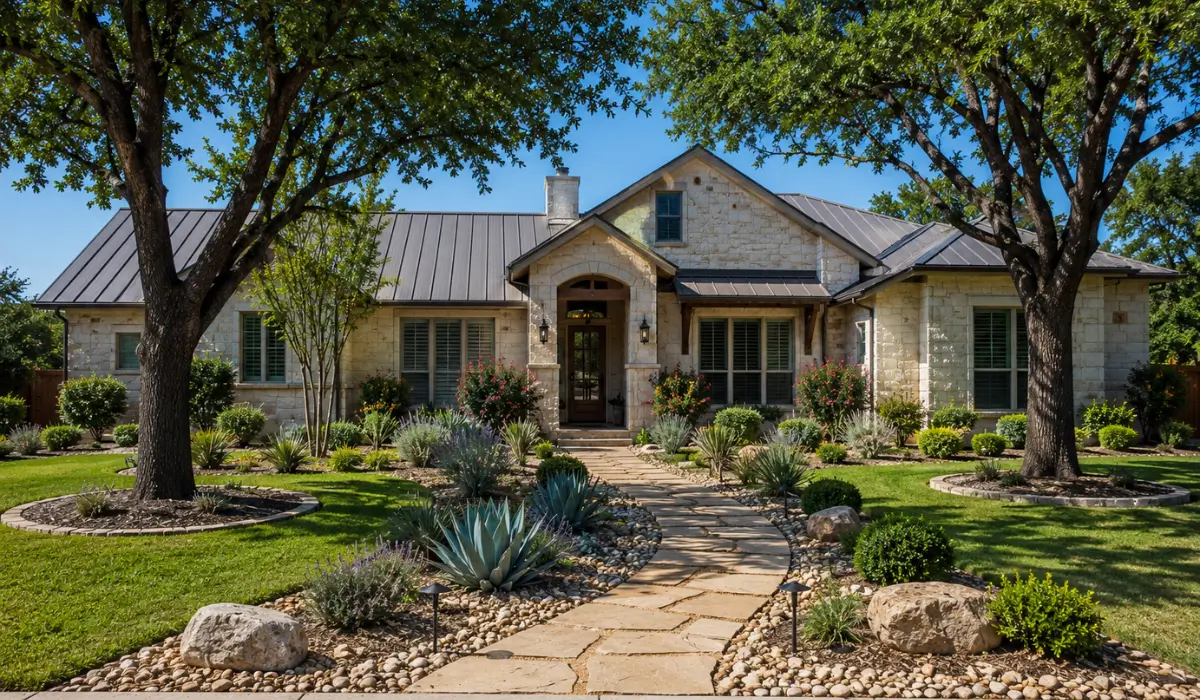
Fire-resistant landscaping helps reduce burnable material around a home through plant spacing, debris removal, properly maintained irrigation, and planned hardscape. Fire-safe landscaping may reduce certain risks, but no landscape can make a property fireproof.
All Seasons Austin Landscaping helps Austin-area homeowners improve plant spacing, irrigation coverage, access, and seasonal yard cleanup during dry weather.
Safety Notice: This article focuses on landscape planning and property care. During active wildfire conditions, follow instructions from local emergency officials and fire authorities.
Every landscape contains materials that can burn under certain conditions. Wind, prolonged drought, dry vegetation, nearby properties, and windblown embers can influence how fire moves through an area. Guidance from the Texas A&M Forest Service emphasizes evaluating wildfire risk based on local conditions and the area surrounding a home.
These conditions help homeowners decide where debris removal, pruning, plant spacing, or a professional site assessment should receive priority. The goal is not to eliminate every plant but to identify areas where dry material or connected vegetation deserves attention.
Suitable plant selection is only one part of the process. Proper irrigation, pruning, debris removal, and adequate spacing can limit dry vegetation and make seasonal yard care more manageable.
A house-outward inspection helps identify areas where dry vegetation, plant growth, debris, and landscape features may need attention. Starting near the home and working toward the property edge makes it easier to prioritize the locations that can have the greatest effect on ongoing landscape care.
This article uses a practical three-zone framework to organize the inspection. Before making landscape changes, homeowners should confirm that any zone names, recommendations, or defensible-space guidance reflect the most current information from the appropriate Texas and local fire authorities. This article does not include distance recommendations because official guidance may change over time.
| Zone | Primary Focus |
|---|---|
| Zone 1 | Reduce debris and vegetation close to the home. |
| Zone 2 | Separate planting areas and reduce continuous vegetation. |
| Zone 3 | Maintain the outer yard, property edges, and neighboring vegetation. |
Each zone supports the next. Beginning near the home and moving outward helps create a landscape that is easier to inspect, maintain, and adapt as plants mature or site conditions change.
The landscape nearest the house deserves frequent attention because leaves, twigs, mulch, and overgrown plants can collect beside structures and remain unnoticed.
Inspect planting beds, wall corners, spaces beneath decks, areas around outdoor equipment, and other locations where leaves and plant debris collect. Removing loose material makes these areas easier to inspect and prevents debris from remaining in place for long periods.
Look for:
Roof valleys and gutters should also remain clear, although roof maintenance may require an appropriate contractor.
Shrubs, ornamental grasses, vines, and tree branches should have suitable clearance from siding, windows, rooflines, attached fences, decks, and outdoor equipment. Plants growing against structures can collect debris and make inspections more difficult.
Selective pruning or plant relocation may be necessary when mature growth exceeds the available space. NFPA guidance supports maintaining defensible space and reducing vegetation close to structures as part of wildfire risk reduction.
Common warning signs include:
No mulch or ground-cover material is suitable for every location. Material selection should reflect its distance from structures, drainage, moisture, heat retention, accessibility, upkeep, and applicable guidance from fire authorities.
The area closest to the home deserves added attention because windblown embers and dry plant material can collect beside walls and other structures. Check these locations during seasonal cleanup and after periods of strong wind.
Walkways, patios, decorative stone, gravel, and other noncombustible features can organize planting beds and improve access for cleanup and pruning. They can also separate groups of plants without making the landscape appear bare.
Well-planned hardscape should fit the way the yard is used while keeping planting areas accessible. Patio and walkway construction can add durable paths and gathering areas within the broader landscape plan.
Zone 1 takeaway: Keep the area closest to the home clean, accessible, and free of unnecessary dry debris.
The middle portion of the landscape should avoid long, uninterrupted stretches of vegetation. Separating planting areas makes it easier to inspect plants, reach irrigation components, remove debris, and complete seasonal pruning.
Many nursery plants appear much smaller than they will become after several years of growth. Planning for mature size reduces crowding and leaves room for pruning, irrigation work, and cleanup.
Adequate spacing also helps prevent plants from growing into nearby shrubs or structures. Landscape design services can help homeowners plan around mature growth rather than installation-day appearance.
Large planting beds can become difficult to inspect as vegetation matures. Lawn areas, walkways, decorative stone, and open spaces can separate plant groups and provide access for pruning or irrigation work.
These breaks also make it easier to see where plants are becoming crowded, debris is collecting, or sprinkler coverage is uneven.
Ladder fuels are plants or branches that connect low-growing vegetation with tree canopies. Dense shrubs beneath trees, climbing vines, and tall grasses beneath branches can create these vertical connections.
Property checks can identify these areas, while selective pruning or plant relocation may reduce vegetation connecting the ground with tree canopies. Tree pruning should follow current professional recommendations or be completed by a qualified tree professional.
Zone 2 takeaway: Separate planting groups, allow for mature growth, and reduce connections between ground vegetation and tree canopies.
Dry vegetation near property lines can connect unmanaged areas with the rest of the yard. Dry grass, brush, fallen limbs, and vegetation along fence lines can form continuous areas of burnable material.
Check the outer sections of the property after storms, prolonged dry weather, or seasonal leaf drop. Focus on fallen branches, brush buildup, overgrown vegetation, and locations that are difficult to access.
Look for:
Landscape conditions often extend beyond property lines. When shrubs, vines, or trees along shared fences become overgrown, coordinating with neighbors can improve access and preserve privacy on both properties.
Zone 3 takeaway: Keeping the property edge clear helps reduce connected areas of dry vegetation across the yard.
Plant selection involves more than appearance or drought tolerance. Mature size, growth habit, dead material, water needs, placement, and the amount of care a plant requires all affect how it performs in the landscape.
| Evaluation Factor | Question to Ask |
|---|---|
| Plant health | Can this plant remain healthy under normal site conditions? |
| Dead material | Does it collect dry leaves, bark, or branches? |
| Growth habit | Will it become dense or difficult to prune? |
| Mature size | Will it crowd nearby plants or structures? |
| Upkeep | Can it be cleaned and pruned as needed? |
| Placement | Is the location suitable for its mature form? |
| Water needs | Can the irrigation system support it appropriately? |
Healthy planting beds depend on pruning, seasonal cleanup, and spacing that reflects mature growth. Garden care services can address overgrown shrubs, ornamental grasses, perennials, and accumulated plant debris.
Drought tolerance and fire resistance are not the same. A drought-tolerant plant may still collect dry material, contain oils or resins, become dense without pruning, grow too close to structures, or become hazardous when it is unhealthy or neglected.
Conversely, a plant with moderate water needs may still be appropriate if the site, irrigation system, and maintenance support healthy growth.
Fire-safe landscaping considers more than water use. Plant structure, dead-material buildup, spacing, placement, health, irrigation, and ongoing maintenance all influence how vegetation performs during dry conditions
Drought tolerance and fire resistance are not the same. Fire-safe landscape design also considers plant structure, dead-material buildup, spacing, health, placement, irrigation, and maintenance.
A well-maintained irrigation system helps plants stay healthy during dry conditions, but it does not protect a property during a wildfire.
Inspect sprinkler coverage, repair broken or blocked heads, check drip lines, and correct dry areas beside structures. Group plants with similar water needs, adjust irrigation to seasonal conditions and local watering restrictions, and avoid overwatering or runoff.
Follow local watering restrictions and adjust irrigation schedules as seasonal conditions change. Find Your Watering Day provides the current City of Austin watering schedule for residential properties.
Irrigation supports plant health, but it is not a fire barrier. Plant health, spacing, maintenance, and site conditions also influence fire-safe landscaping.
A brief property check can reveal conditions that call for cleanup, pruning, irrigation work, or a closer site review.
These signs can help homeowners decide whether the yard needs debris removal, plant relocation, irrigation correction, or professional evaluation.
A landscape assessment considers plant spacing, tree relationships, irrigation performance, drainage, hardscape, access, and seasonal debris so homeowners can identify areas that need attention.
Austin landscaping services can address planting, irrigation, drainage, access, and hardscape conditions.
A qualified tree professional can assess tree condition, structure, canopy relationships, and pruning needs. Questions involving wildfire behavior, emergency planning, building codes, or official defensible-space recommendations should be directed to the appropriate fire authority.
Tree services can address pruning and tree-care needs identified during a property review.
Fire-safe landscaping depends on regular maintenance rather than a one-time project. A routine inspection schedule helps identify changes before they become larger maintenance issues.
Walk the property regularly and look for:
As the seasons change:
Irrigation repair services can address damaged components and uneven water distribution.
Review the overall landscape each year to identify long-term changes.
A fire-conscious landscape can still provide shade, privacy, seasonal color, and useful outdoor spaces.
All Seasons Austin Landscaping designs and maintains landscapes based on each property’s layout, growing conditions, and maintenance priorities.
Every property has different planting, irrigation, drainage, and hardscape needs. A site evaluation can identify practical improvements that fit the yard’s current condition and the homeowner’s priorities.
Request a property assessment to discuss planting, irrigation, drainage, hardscape, and seasonal maintenance needs.
What is fire-resistant landscaping?
Fire-resistant landscaping uses plant selection, spacing, irrigation, hardscape, and property care to reduce burnable vegetation near structures. No landscape can eliminate wildfire risk.
Can landscaping prevent a house fire?
No. A maintained landscape may reduce certain risks, but it cannot guarantee that a home will remain undamaged during a wildfire.
Are drought-tolerant plants fire-resistant?
Not always. Plant health, spacing, placement, growth habit, and upkeep all affect how vegetation performs during dry conditions.
What is a defensible-space zone?
A defensible-space zone is an area around a structure where vegetation and landscape features are assessed according to guidance from the appropriate fire authority.
Is rock or gravel safer than mulch near a house?
Rock and gravel are noncombustible, but material selection should also consider heat retention, drainage, upkeep, accessibility, and applicable local guidance.
Should healthy trees be removed to create defensible space?
No. Healthy trees should be evaluated according to their condition, structure, spacing, canopy relationships, location, and current official recommendations before removal is considered.
Can sprinklers protect a property during a wildfire?
No. Irrigation supports plant health but should never be relied upon as wildfire protection.