
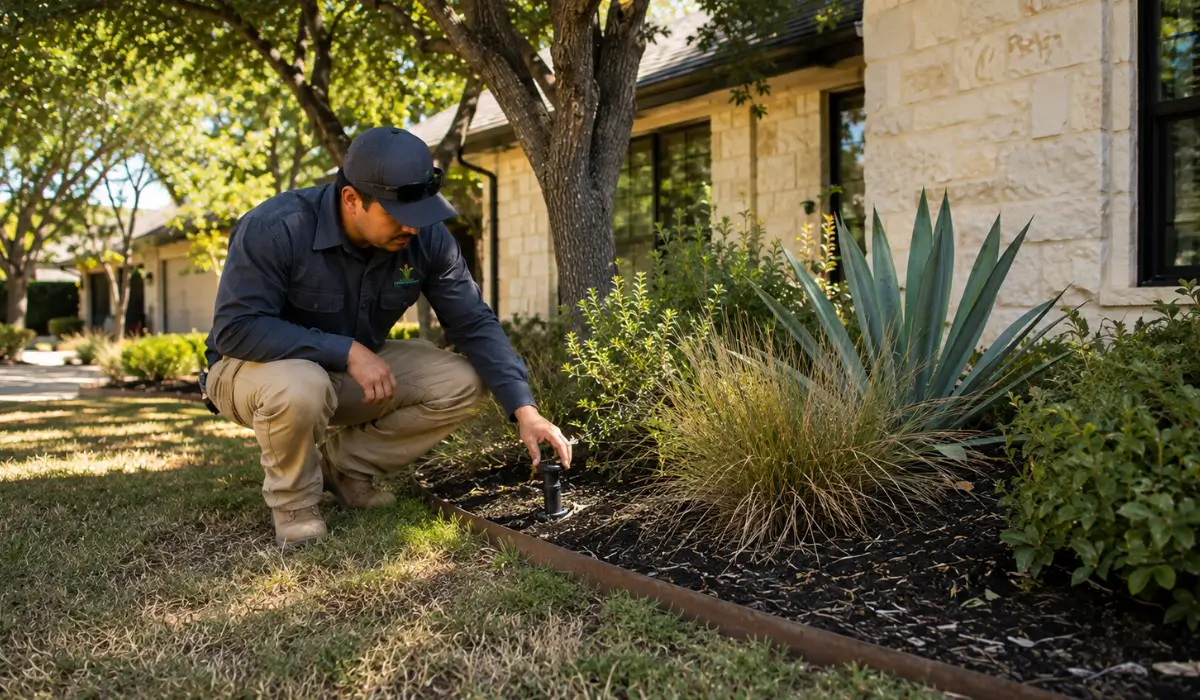
Fall landscaping in Austin should begin with summer-damage cleanup, irrigation checks, soil and mulch care, planting preparation, and a lawn assessment. Handling these tasks in September helps homeowners enter October with a clear plan instead of a growing repair list.
Central Texas can still feel like summer, so stressed plants, thin turf, and tired beds need inspection before pruning or replacement. Fall preparation is a transition, not a weekend project.
These five fall landscaping tips move through cleanup, flower beds, mulch, irrigation, and lawn conditions. All Seasons Austin Landscaping helps homeowners decide what to remove, repair, or leave alone before cooler weather arrives.
Before replacing plants or cutting summer growth, sort visible problems by what they need. This makes September landscaping more deliberate and helps prevent unnecessary pruning.
Clear fully dead annuals, clearly broken branches, weeds going to seed, material blocking drainage or irrigation, and heavy buildup smothering smaller plants. Diseased-looking debris may need identification before treatment or disposal.
Check broken sprinkler heads, washed-out bed edges, bare soil, loose edging, damaged mulch, erosion channels, and young plants needing better support.
Heat-stressed living plants, shrubs with uncertain decline, and turf that may be dormant rather than dead deserve assessment before removal.
Quick answer: September cleanup should remove true waste and hazards without stripping the landscape bare. Heat-stressed plants, dormant turf, and unclear damage should be assessed before they are cut back or replaced.
Start seasonal yard cleanup with problems affecting plant health, irrigation, access, or safety. Healthy growth can remain while the landscape transitions toward cooler conditions.
Remove dead material trapping moisture, broken limbs, weeds competing with garden plants, and debris covering sprinkler heads. Address plants blocking walkways and overgrowth hiding pests or irrigation problems.
Pruning needs vary by species, health, season, and purpose. Remove clearly dead or damaged growth while preserving healthy structure, and identify flowering or budding plants before larger cuts.
Trees and large branches may need professional assessment rather than a universal pruning rule.
Look for broken or hanging branches, deadwood, branches touching structures, exposed roots, soil pulling away from root zones, and irrigation missing the tree.
Texas A&M Forest Service provides Texas tree health resources for additional tree-health information.

A practical fall planting guide begins with the existing bed. Summer conditions can reveal where water, sunlight, spacing, or plant selection needs attention.
Clear weeds, misplaced volunteer plants, dead annuals, crowding, and debris covering the soil. Repair edging where grass is spreading into beds.
Notice where plants repeatedly failed, soil stayed wet, beds dried quickly, afternoon heat was strongest, plants outgrew their space, or irrigation missed part of the bed.
Repeated plant problems often point to growing conditions rather than the plant alone. Good garden care in Austin TX starts by checking soil moisture, sunlight, spacing, and irrigation before choosing replacements.
Consider mature size, sun exposure, soil drainage, irrigation access, maintenance needs, and compatibility with nearby plants.
Larger changes may benefit from landscape design and installation that considers plant selection alongside existing property conditions.
Mulch should protect the soil rather than simply make a bed look newly finished.
Useful mulching techniques can slow moisture loss, buffer soil temperatures, limit weeds, protect exposed soil, and give beds a finished appearance.
Avoid piling mulch against trunks or stems, covering irrigation components, hiding drainage problems, or adding material over a thick, compacted layer. Keep mulch off walkways and address weeds first.
Pull back a section and check depth, compaction, weeds, standing moisture, and plant-base clearance. Add only what the bed needs.
Quick answer: Good mulching protects the soil without burying plant stems, blocking irrigation, or hiding drainage problems. Inspect the existing layer before adding more.
An irrigation check shows where water is actually going before controller settings change.
Look for broken or tilted heads, clogged emitters, pavement overspray, dry gaps, excessive overlap, runoff, blocked spray, leaks, and unusually soft ground.
Water needs can change with temperature, rainfall, day length, plant growth, soil moisture, restrictions, and new plantings.
Austin homeowners should review the City of Austin’s current watering day rules when adjusting schedules rather than relying on one watering formula for every property.
| What the Homeowner Sees | Possible Issue to Inspect |
|---|---|
| One dry strip | Coverage gap or blocked sprinkler |
| One wet corner | Leak, drainage problem, or excessive overlap |
| Bed plants declining in a line | Drip or emitter problem |
| Runoff onto pavement | Cycle length, slope, compaction, or head placement |
| Different plant types on one zone | Mismatched water needs |
Check irrigation and drainage before replacing plants. New material can struggle when the original water problem remains.
Thin or brown turf does not automatically need replacement. Austin homeowners planning fall yard work should identify the likely cause before choosing seed, sod, or recovery time.
Lawn overseeding may provide seasonal coverage in suitable lawns. Grass type, homeowner expectations, maintenance, irrigation, timing, and site conditions should guide the decision.
The overseeding services information can help homeowners considering overseeding in Austin TX weigh that option.
Sod may suit large bare areas, extensive turf loss, completed grading or construction, a need for faster coverage, or grass that no longer suits the site.
Texas A&M AgriLife turfgrass resources cover turf selection and management considerations for Texas conditions.
Do not place seed or sod over unresolved irrigation failures, severe compaction, poor drainage, construction debris, erosion, shade problems, or unidentified pest or disease concerns.
Lawn maintenance services can support broader turf assessment. Lawn leveling services may apply where uneven ground contributes to the problem.
Use the condition most likely to interfere with later work to determine what comes first.
| Priority | Action | DIY or Professional Review? | Related Service |
|---|---|---|---|
| Urgent | Repair broken irrigation | Professional when unclear | Sprinkler repair |
| High | Remove hazardous material | Depends on size and access | Tree or garden care |
| High | Identify bare-lawn cause | Assessment recommended | Lawn maintenance |
| Medium | Refresh planting beds | DIY or garden service | Garden care |
| Medium | Review mulch coverage | Diagnose moisture first | Garden care |
| Planning | Select fall plants or sod | Design help for larger changes | Landscape design |
Future planting should account for mature size and shade. Austin shade tree planning covers practical considerations for local properties.
This keeps fall landscaping Austin priorities focused on causes before appearance improvements
Use September to prioritize work that affects later landscape decisions without treating every sign of summer stress as urgent.
Prioritize irrigation repair, tree safety concerns, sod-site evaluation, landscape-design consultation, and larger planting projects where current conditions call for action. Flower bed maintenance in Austin TX may also belong on the September list when weeds, crowding, damaged edging, or heavy buildup are affecting healthy growth.
Map out plant selection, hardscape changes, future shade, irrigation-zone updates, and the fall installation sequence.
Watch heat-stressed living plants, small lawn color changes, beds awaiting cooler conditions, and areas responding to recent irrigation adjustments.
Homeowners searching for garden maintenance near me can use All Seasons’ landscape expertise to help determine which conditions deserve action and which need more observation.
September preparation is about knowing what the property needs next, not making every area look finished.
All Seasons provides landscaping, garden care, lawn maintenance, irrigation repair, tree services, and landscape design for Austin-area properties. The team can help determine which work belongs on the September list and which should wait for cooler conditions.
Fall landscaping planning and cleanup can begin in September. Planting and lawn-work timing depends on weather, plant type, soil conditions, and the proposed work.
Remove dead annuals, weeds going to seed, broken material, debris blocking irrigation, and excessive bed buildup. Keep living but heat-stressed plants until their condition becomes clearer.
Pruning depends on species, flowering cycle, plant health, and purpose. Remove clearly dead or damaged growth without treating every shrub the same way.
September can be useful for inspecting and refreshing mulch. Check depth, moisture, weeds, compaction, and plant-base clearance before adding more.
Overseeding provides seasonal or supplemental coverage, while sod establishes or replaces a broader turf surface. Grass type and site conditions should guide the decision.
Brittle stems, viable growth, root condition, and species behavior can provide clues. Stressed or dormant plants can resemble dead plants, so uncertain cases deserve assessment before removal.